A Centre for Sustainable Energy (CSE) initiative that gives communities information, time and space to develop their own local energy vision

What is renewable energy?
The way the UK is producing and using electricity is changing.
More of the energy we produce in the UK is coming from renewable sources - wind, solar and hydro (52.5% in 2025). We now generate much less from traditional sources like gas and almost none at all from coal.
Renewable energy generation creates less carbon dioxide which is the main driver of climate change.
In 2025, more of our electricity was produced by wind power than any other source, including gas.
Wind turbines
-
Most wind turbines are between 100 and 160 meters tall. This is much taller than the average electricity pylon. When wind moves over the turbine blades, they spin a turbine that creates an electric current.
-
The largest wind turbines in England are in Avonmouth and are owned by a group of residents from nearby Lawrence Weston, a housing estate on the edge of Bristol. Some of the income it generates will be used to help the local community.
-
A 160m wind turbine can generate enough power for over 2,000 average homes.

Solar farms
-
Although rooftop solar has an important role to play in the future, on average it only provides about 40% of a home's electricity needs. And the demand for electricity will rise as households switch from gas heating and combustion cars to heat pumps and electric vehicles.
-
This is why Future Energy Landscape focuses on solar farms and not roof-top solar.
-
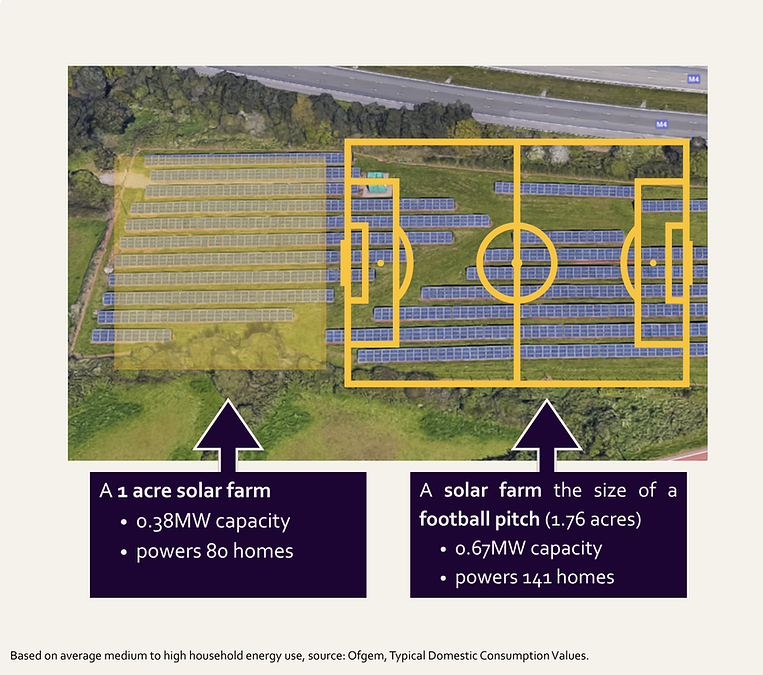
A solar farm is a group of ground-mounted solar panels. A 1-acre solar farm (an acre is about two-thirds of a professional sized football pitch) can generate enough power for about 80 homes. The panels use a material (usually silicon) to convert energy from the sun into electricity.
-
Many solar farms, including large ones, are owned by community groups.